Build or remodel for a wildfire-resistant home | PEMCO
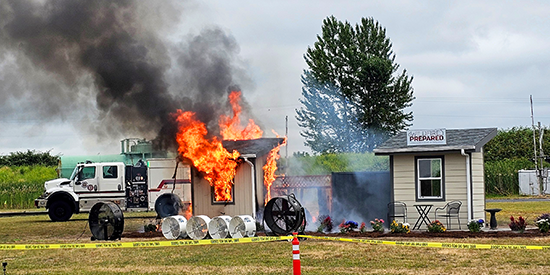 As unsettling as wildfire season can be, you may have more control over your home’s destiny than you think. Homes built with wildfire-resistant construction are 50% less likely to succumb to flames than their traditionally built neighbors, according to researchers at California InterContinental University.*
And the news gets even better: When it comes to designing a wildfire-resistant home, “building better” adds only about 2 to 3% in overall material costs.* Safer choices like non-combustible hardscaping near your home, ember-resistant vents, metal roofs, fiber-cement siding, and double-pane windows dramatically improve fire resistance compared to traditional wood and non-reinforced materials, according to PEMCO partner and nonprofit research and communication organization, the Insurance Institute for Business and Home Safety (IBHS) and researchers at Headwaters Economics. An added bonus: They may even help you save with lower maintenance costs over time!
That offers real hope for wildfire-weary PNW homeowners looking to harden their homes against a threat that now spans May through October.
Which fire-resistant construction materials pay off most?
When we think of wildfire, we often envision an impenetrable wall of flame. However, up to 90% of structures burned in wildfires aren’t lost to an inferno, but to embers that quietly float in from fires that may be miles away.
According to wildfire risk analysts with Smart Investment Technologies, you’ll get the most protection for the least money when you prioritize these choices (in order):
-
Ember-resistant vents – highest impact, low cost
-
Defensible space (Zone 0-5 feet) – remove combustibles nearest the house, replace mulch with hardscaping
-
Non-combustible roof – Class A rated, including metal and certain fiberglass shingles
-
Eave and soffit enclosures – box in open eaves
-
Windows and exterior walls – double-paned and tempered glass, non-combustible siding.
A proven blueprint for wildfire-risk reduction
Both Washington and Oregon participate in IBHS’s Wildfire Prepared Home program. It offers a blueprint homeowners can follow to systematically harden their homes against fire. For existing homes, start with the “Base” plan that focuses on embers. If you’re building a new home or doing a major remodel, go for the “Plus” plan that adds protection for flames and radiant heat.
This detailed checklist explains the two plans and helps you work your way through important fixes. While it’s possible to get your home officially designated as a “Wildfire Prepared Home,” taking any of the steps is valuable even if you’re unable to complete every one.
Helping members prevent the preventable
PEMCO Vice President and Chief Claims Officer Calvin Strong has witnessed a Wildfire Prepared Home stand firm in the face of flames – a testament to science, preparation, and the power of prevention.
In a controlled IBHS demonstration, two seemingly identical structures – one with standard construction, one with Wildfire Prepared Home construction – simulated how wind-driven embers could ignite and burn one building, while leaving the other unscathed. The video speaks for itself!
“We’re partnering with IBHS because we share similar values and have a common, overarching priority: to help individuals and communities understand risks and empower them with information and tools to prevent them from experiencing damage,” Calvin said.
“I’m proud PEMCO is part of this conversation. And I’m even prouder that we’re helping all our members and those in the community prevent the preventable.”
For more timely tips to Plan, Prepare, and Prevent during wildfire season, check out PEMCO’s wildfire blog. And as always, if you have questions about your PEMCO policy, talk with your local PEMCO agent or call 1-800-GO-PEMCO.
*About the research: Study authors note that prices were nationally sourced and don’t reflect local shortage-driven costs following a wildfire or the higher costs of retrofitting existing homes versus building from scratch. In addition, results from tests and simulations can differ from real-world conditions influenced by factors like wind, fire intensity, and surrounding vegetation.
Share on social media