CO & Gas Detectors for Northwest Homes | PEMCO
CO and Gas Detectors: What Every Northwest Homeowner Should Know
Carbon monoxide detectors and gas alarms don't get much attention until they go off. For Northwest homeowners with gas appliances, a furnace, or an attached garage, they're some of the most important devices you can have, and some of the most overlooked. Here's what to know about how they work, what the law requires, and how the right setup can save you money on your policy.
Are Carbon Monoxide Detectors Required in Washington and Oregon?
Yes, and in both states, the requirement applies to most homes.
In Washington, carbon monoxide (CO) detectors are required in all new residential construction and in existing homes during certain trigger events like remodel permits or change of ownership. The law requires detectors on every floor with sleeping areas and outside each separate sleeping area.
In Oregon, the requirement is similar. CO alarms are required in all dwellings, including existing homes, and must be installed outside each sleeping area and on every floor.
If you've lived in your home for a few years without ever checking this, it's worth a look. The requirement doesn't always come with someone knocking on your door to verify. It's on homeowners to make sure the devices are in place.
Why Is Carbon Monoxide Especially Dangerous in Northwest Homes?
Because of how we heat our homes, and how long we button them up in the winter.
Carbon monoxide is produced when fuel burns incompletely. Gas furnaces, fireplaces, water heaters, stoves, and attached garages with running vehicles are all common sources. What makes CO so dangerous is that it's colorless and odorless. You can't see it or smell it. Symptoms like headache, dizziness, and nausea can feel like the flu, and people sometimes dismiss them until it's too late.
The Washington State Department of Health reports that more than 20 people die each year from unintentional CO poisoning in the state. In one recent year, more than 500 CO incidents were reported statewide. Those numbers don't include the many cases that go unrecognized because the symptoms aren't immediately connected to CO exposure.
Northwest winters are a particular risk factor. When temperatures drop, we seal our homes tight and run our heating systems hard. That's exactly the environment where a malfunctioning furnace or blocked flue can push CO into living spaces. If you have a gas furnace, a wood fireplace, or an attached garage, this isn't a theoretical risk.
Getting your furnace inspected before heating season is one of the best things you can do to reduce that risk. Our 12-point home safety checklist has a full rundown of what to look at before the cold sets in.
Where Should Carbon Monoxide Detectors Be Placed?
The essentials: at least one on every floor, and outside each sleeping area. That's the legal minimum in most cases.
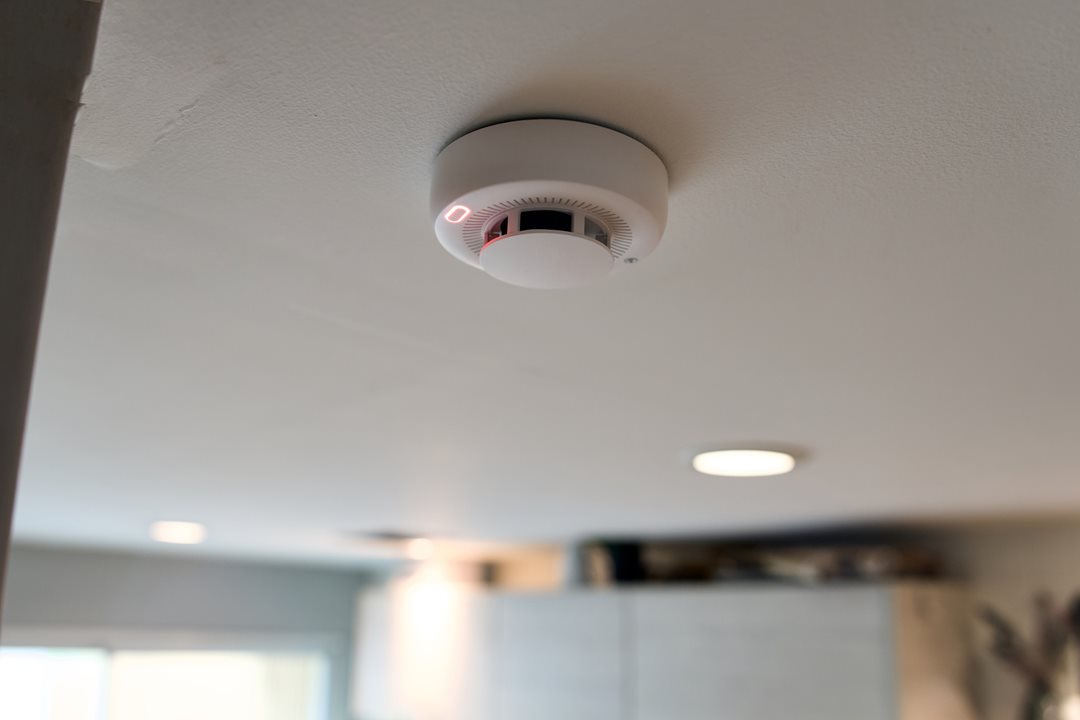
In practice, placement matters. CO is slightly lighter than air, so unlike smoke, it tends to distribute throughout a room rather than rising directly to the ceiling. Detectors can go on a wall or ceiling. Most manufacturers recommend keeping them at a height where a sleeping person would breathe, typically five feet or higher.
A few placement tips that often get overlooked:
- Near your garage. If your garage is attached to your home, CO from a running vehicle can migrate through walls and into living areas faster than you'd expect. A detector near that shared wall is worth having.
- Near the furnace. Not inside the mechanical room, since placing a detector too close can trigger nuisance alarms, but in the adjacent hallway or living area.
- In each bedroom if you want maximum protection. The legal requirement is outside the sleeping area, but if a family member is a heavy sleeper or has hearing challenges, a detector inside the bedroom provides earlier warning.
Do You Need a Natural Gas Detector in Your Home?
Here's the thing about natural gas: it doesn't have a smell on its own. The rotten-egg odor we associate with gas leaks is actually a chemical additive called mercaptan, added by utilities specifically so people can detect leaks. Most of the time, that smell is enough of an early warning. But not always.
Natural gas detectors sense gas concentrations in the air before they reach dangerous levels. They're not required by law in most situations, but for homes with gas appliances, they're a smart addition to your safety setup.
Where they're most useful:
- Near your gas range or cooktop
- Near a gas water heater, especially if it's in an enclosed utility closet
- Near a gas fireplace insert or log set
- In a basement where gas lines run
If you ever smell gas, leave the home immediately, call 911 from a safe location, and then contact your gas utility. Do not use light switches, electronics, or any device that could create a spark while you're inside the home.
Is There a Combination Alarm for Both CO and Natural Gas?
Yes, and for most homeowners, a combination CO and natural gas alarm makes a lot of sense.
These devices detect both hazards with a single unit. Brands like Kidde and First Alert make combination alarms that meet UL standards for both CO and combustible gas detection. They're widely available at hardware stores, and they simplify the whole question of where to put things.
A few things to keep in mind with combination units:
- Read the placement instructions carefully. CO sensors and gas sensors sometimes have different optimal mounting heights. Many combination units resolve this for you, but it's worth understanding where the manufacturer recommends installation.
- Battery backup matters. Any alarm that relies solely on AC power becomes useless in an outage, which is exactly when you might be using a generator or alternative heat source. Both are common CO sources during Northwest windstorms.
- Test and replace on schedule. Like smoke alarms, CO detectors have a limited lifespan, typically five to seven years for the CO sensor. Check the manufacture date on the back. Many people replace the battery regularly but don't realize the sensor itself wears out.
Can Gas and CO Detectors Lower Your Home Insurance Costs?
They can. PEMCO offers a Protection Device Discount to members who have qualifying safety devices in their home, and CO alarms are among the devices that can qualify.
The discount is straightforward. If your home has centrally monitored smoke alarms, CO detectors, and other qualifying protection devices, you may be paying less than neighbors who don't. It's one of those cases where doing the right thing for your family's safety and getting a break on your premium line up nicely.
Details on what qualifies and how to apply the discount are available at go.pemco.com/protecting-what-matters. If you're already a PEMCO member and you've installed a CO detector or updated your smoke alarms, it's worth checking whether your policy reflects it.
Carbon monoxide and gas leaks aren't the most comfortable topics to think about. But a $30 detector and five minutes of installation is a pretty small ask for what it protects. If you're not sure whether your home has the right devices in place, or what that means for your policy, we're here to help.
Share on social media